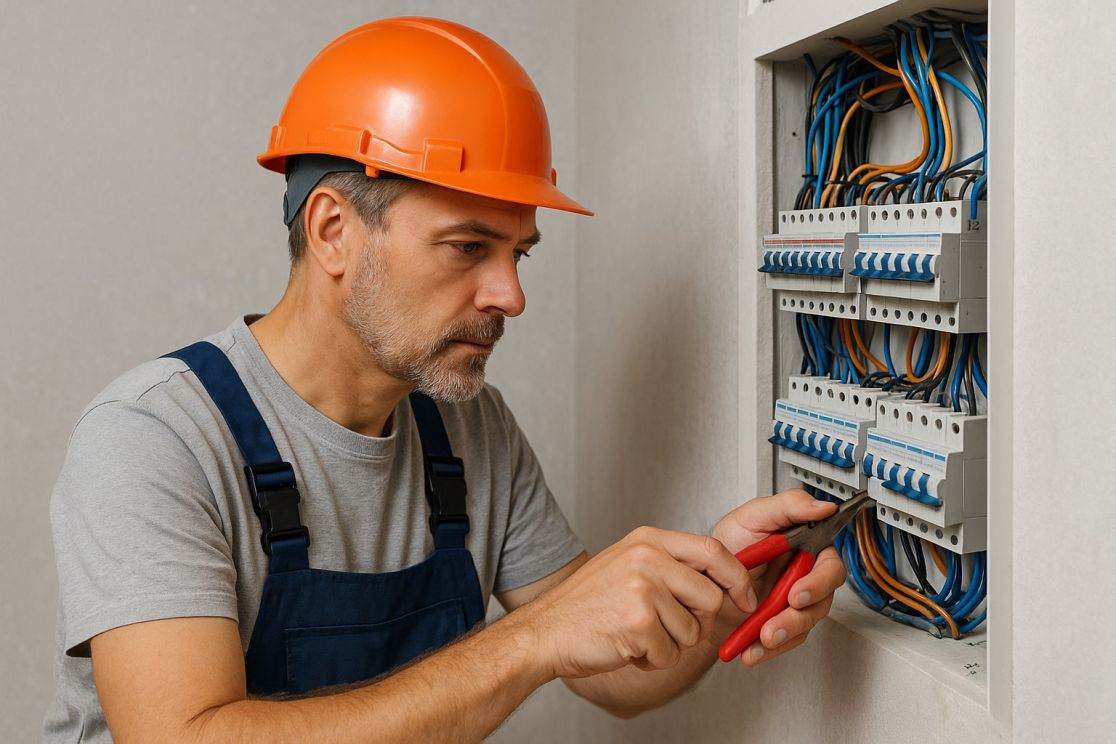
Let’s be honest, electricity isn’t something most of us think about until something goes wrong. The lights flicker, a fuse blows, or a plug feels warm and suddenly it’s panic stations. In a city like Budapest, where beautiful classical buildings mix with decades-old panel apartments, electrical quirks are just part of the landscape. But some warning signs are worth paying attention to for safety, peace of mind, and yes, even resale value.
Here are ten friendly (and slightly eye-opening) clues that it’s time to put down the screwdriver and pick up the phone to a professional.
1. Your lights flicker and not in a cosy candlelight way
A little flicker when the washing machine kicks in? Normal. Lights that dim every time you boil the kettle or run the hair dryer? Not so normal.
That can mean your system’s under pressure or there’s a loose connection somewhere. It might not sound urgent, but over time it can lead to bigger problems. Better to have an electrician check it before your dinner party goes dark.
2. The breaker trips again… and again
If you’re constantly running to the fuse box, your circuits are probably overloaded.
Modern life means laptops, chargers, air conditioning, dryers all plugged in at once. Older homes simply weren’t built for that kind of load. A quick check from a pro can reveal if your system needs a small tweak or a bigger update.
3. That smell? It’s not your cooking
A faint burning smell or an outlet that feels warm to touch is a red flag. It can mean wires or connections are overheating.
Step one: switch off the power to that outlet.
Step two: call an electrician, not your neighbour, not your cousin, a real one. This is one of those “better safe than sorry” moments.
4. You hear buzzing or crackling
Electricity should be silent. Any kind of buzzing behind a switch, hum from a panel or sizzle near a socket is worth checking out.
Sometimes it’s a loose screw, sometimes it’s something more serious. Either way, it’s not the kind of sound you want as background noise.
5. Your wiring looks like spaghetti
Budapest’s charm often comes with quirks like wiring that’s older than your grandparents. If your place has never had a proper electrical inspection, or you’ve found mystery cables behind a wall, it’s time to get things assessed.
Aluminium wires, DIY connections and “creative” past repairs can all cause issues down the track.
6. You feel tiny shocks or see sparks
A little zap when you touch an appliance or plug something in might seem harmless, but it means something’s not grounded correctly.
Don’t brush it off. That’s exactly what safety switches (the “FI-relé” or RCD) are meant to prevent. If you don’t have one, or you’re not sure if it’s working, get a licensed electrician to test and install one.
7. You’re living in a web of extension cords
If your living room looks like a snake pit of cables and adapters, you’re asking for trouble. Extension cords are great for temporary fixes not for permanent living.
The safer (and neater) option is to add more outlets or split the load across circuits. It’ll look better, feel safer and make cleaning a whole lot easier.
8. Things went weird after your renovation
You’ve upgraded the kitchen, added new lighting and maybe even installed air-conditioning — but suddenly the power cuts out when you use the oven and the dryer together.
That’s a sure sign your system wasn’t updated to match your new appliances. An electrician can quickly test the load and make small adjustments that save big headaches.
9. You don’t have (or don’t know about) a safety switch
Every modern Hungarian home should have a residual current device, or RCD the thing with a “Test” button on your switchboard.
It’s designed to cut the power instantly if there’s a fault, protecting you from electric shock. If you don’t have one (or you’re not sure), it’s one of the smartest and most affordable upgrades you can make.
10. You just have that “hmm, not sure this is safe” feeling
Trust your gut. If something feels off lights dimming, sockets looking tired, fuses tripping , it’s time to get a check-up.
In Hungary, you can ask for a villamos biztonsági felülvizsgálat (electrical safety inspection). You’ll get a certificate showing everything’s up to standard a big plus if you’re planning to sell or rent your place.
Why this matters right now
Budapest’s mix of vintage apartments, 1970s panel flats and sleek new builds makes for a beautiful skyline, but a patchwork of wiring ages and standards.
In 2024, the National Fire Service reported that electrical faults were among the top causes of home fires in Hungary. Many could have been prevented with simple upgrades like modern circuit breakers, proper grounding, and working safety switches.
For homeowners, a quick check today can mean a safer, more valuable home tomorrow. And for sellers, a recent electrical inspection adds instant buyer confidence.
5 Quick Q&A for Budapest homeowners
1. How often should I test that “Test” button on my switchboard?
Once a month is perfect. It should trip the power instantly. If it doesn’t, call an electrician.
2. My power strips are full, is that bad?
Yes and no. They’re fine for short-term use, but constant overloading can cause heat and fire risk. Add proper outlets instead.
3. We just moved in. Should we get the wiring checked?
Absolutely. You never know what’s behind the walls especially in older buildings.
4. Can I fix small issues myself?
If it’s changing a light bulb, go for it. Anything else? Leave it to the pros.
5. What’s one easy upgrade that really pays off?
Install an RCD if you don’t already have one. It’s the best “invisible” protection money can buy.
Bottom line
Electricity is the quiet hero of your home, until it isn’t. So if something smells, sparks, hums, or just feels off, don’t ignore it. A quick visit from a qualified electrician can keep your home safe, your appliances happy, and your peace of mind intact.