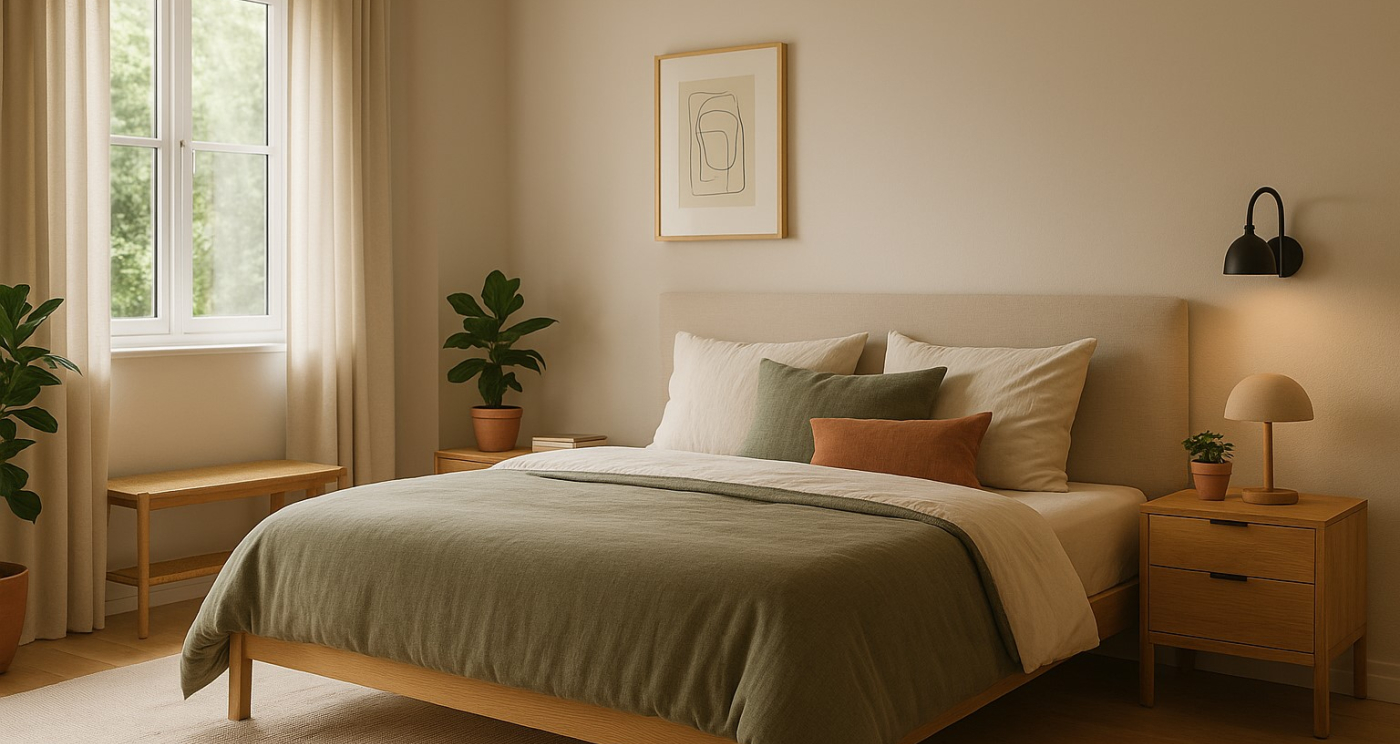
If there’s one room that works hardest for your wellbeing, it’s the bedroom. It’s where you decompress, read, recharge and (hopefully) sleep deeply. So when you’re planning a renovation, giving this space thoughtful attention is one of the smartest investments you can make.
In Hungary, more than 90% of people live in homes they own rather than rent, meaning every renovation choice is an investment in long-term value. At the same time, the property market has been busy: recent data shows that the first nine months of a recent year saw nearly a 40% year-on-year increase in housing transactions. A peaceful, well-designed bedroom can help your home stand out, whether you plan to sell or simply enjoy it.
1. Start with the mood: what do you want your bedroom to feel like ?
Before choosing fabrics or furniture, decide what atmosphere you want:
- Calm and hotel-like
- Soft and cosy
- Light, airy and minimal
Many smaller bedrooms in flats fall around 8–10 m². In rooms this size, too many colours or bulky items can quickly overwhelm the space. Choosing a simple palette of two or three tones creates harmony and keeps the room feeling restful rather than chaotic.
Ask yourself:
- Do I work or read in bed?
- Do I need space for a vanity or desk?
- Do I share the room with a partner, child or pet?
Your answers help determine your layout, furniture size and lighting needs.
2. Plan a realistic bedroom renovation budget
A bedroom renovation is typically less expensive than updating a kitchen or bathroom, but costs can still rise once you include flooring, electrics and storage.
Renovation pricing guides suggest that a full internal renovation of a 100 m² home typically ranges from 5.5–9.8 million HUF, depending on scope and finish quality. This equals roughly 55,000–98,000 HUF/m² for substantial interior work.
A bedroom-only renovation is just a slice of that, but common costs include:
- Painting and minor wall repairs
- New flooring or refinishing existing boards
- Built-in or modular wardrobes
- Curtains, blinds and window treatments
- Lighting upgrades
- Additional sockets or switches
- Bed, mattress, textiles and bedside furniture
Always set aside 10–15% of your budget as a buffer for unexpected repairs behind walls, old wiring or flooring issues.
3. Improve comfort: warmth, quiet and fresh air
Even the most beautiful bedroom won’t feel relaxing if it’s cold in winter, noisy at night or poorly ventilated.
Across the EU, 16.8% of people live in overcrowded homes, and among lower-income households here, the overcrowding rate rises to 23.8%. This makes comfort-focused planning especially valuable.
When renovating, consider:
- Insulation and airtightness: adding insulation stabilises temperature and reduces noise.
- Better windows and curtains: modern triple-glazed or well-sealed windows paired with lined curtains cut heat loss and noise.
- Heating control: thermostatic radiator valves or programmable thermostats help maintain a sleep-friendly temperature.
- Ventilation: trickle vents, safe window openings and insect screens help keep air fresh.
4. Layout: make every square metre work
In smaller urban homes, a bedroom often needs to do more than just sleep: it may double as a mini office, dressing room or reading nook.
Start with the essentials:
- Position the bed where you can see the door without being directly in line with it.
- Keep 60–70 cm of walking space around the bed.
- Consider sliding wardrobe doors or storage beds for narrow rooms.
Create useful zones with a compact desk, reading chair or small console.
5. Storage: the secret to a calm, hotel-like bedroom
Clutter is the fastest way to ruin a relaxing bedroom. Smart storage transforms even the smallest rooms.
Use vertical space and built-ins:
- Full-height wardrobes
- Over-bed cupboards
- Shelving in narrow alcoves
- Storage ottomans or under-bed drawers
Inside wardrobes, use pull-out baskets, double hanging rails and dividers to stay organised.
6. Light, colour and texture: create that “hotel” feel
Lighting and finishes have a huge impact on daily comfort.
Layer your lighting:
- 1. Ambient: main ceiling light or track lighting with a dimmer
- 2. Task: reading lamps or wall-mounted bedside lights
- 3. Accent: LED strips in wardrobes, behind headboards or under shelves
Warm-white lighting (2700–3000K) feels calm and relaxing because it gives off a soft, gentle glow similar to a bedside lamp. The 'K' stands for Kelvin, a scale that measures the colour of light: lower numbers mean warm, cosy light, while higher numbers create cooler, bluer tones.
Choose calming colours like muted greens, blues or soft neutrals, and add texture with rugs, linen bedding or an upholstered headboard.
7. Renovate with resale in mind
A well-designed main bedroom adds perceived value. Neutral finishes and great storage appeal to many buyers.
With rising renovation costs and even unrenovated apartments in Budapest often advertised near 1.000.000 HUF/m² buyers increasingly appreciate homes where key rooms are already stylish and functional.
Quick Q&A: Bedroom Renovation Essentials
1. What should I prioritise first?
Start with insulation, windows and bed placement.
2. How much does a bedroom renovation cost?
Expect around 55,000–98,000 HUF/m² for substantial interior work.
3. How do I make a small bedroom feel bigger?
Use light colours, built-ins, sliding doors and layered lighting.
4. Are built-in wardrobes worth it?
Yes, they maximise space and improve resale value.
5. Best quick upgrades on a budget?
Repaint walls, update bedding, improve lighting and refresh curtains.