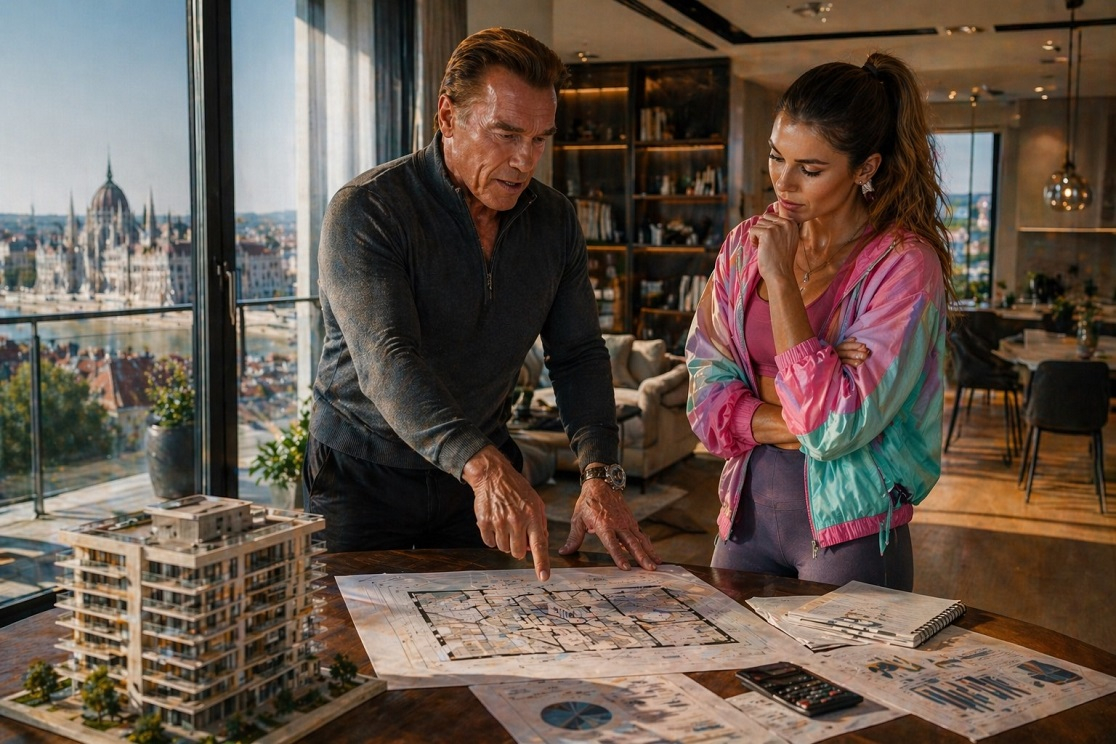
Before Arnold Schwarzenegger became a Hollywood star, he was already financially independent through property from a single six-unit building.
In his early twenties, he bought a six-unit apartment building for around $215,000, using $27,000 he had saved, a $10,000 loan to complete the down payment, and bank financing for the rest. He kept one apartment for himself and rented the other five to actors he knew from the gym, which covered a large part of the mortgage while he built his Hollywood connections.
This was a highly planned early purchase. It was a deal structured to work from day one. If the rent component had not held up, his system would not have held up.
A few years later, he sold this property made around $169,000 profit on that first block and reinvested into a larger apartment building.
“I made my first million in real estate, not in movies.”
He studied long enough to know what a good deal looked like
Schwarzenegger spent years studying the market before his first purchase. For three years, he tracked newspaper listings, compared deals, and worked with an agent. He also followed a clear rule: he would not pay more than ten times gross income, leaving room for maintenance and costs.
Most buyers compare properties before making an offer, but they usually compare the obvious things: purchase price, location, size and advertised rents. What they often miss is the quieter part of the calculation, how quickly similar apartments actually rent, what maintenance is likely to cost, and how much vacancy would change the result.
He made the first building pay for itself
The first building worked because five units were rented from the beginning. The rent made the deal viable from the start.
Most investors focus on buying the right property. Far fewer study in detail on whether the numbers will work in the long run. This is where many first-time investors get into trouble and financial strain.
He used property to buy freedom
Schwarzenegger explained the point clearly:
“I always promised myself I would not get into a position where I would have to take a job or do a role just because I had to make money to make a living.”
For most investors, this is the real value of rental income . It is not only about profit, but control. The rent meant he did not depend on his career to survive.
He scaled by repeating one working model
After his first block of flats, he kept moving into larger buildings.
The path was simple: a six-unit block, then a larger one, then around 27 units, and later around 50 units. Each step was funded by the previous one.
“I just kept buying buildings.”
Scale becomes possible only when the first deal is well structured, often due to in depth study and research.
The deal did not depend on rising prices
The first six-unit building worked because the five rented apartments brought in enough income to cover most of the mortgage and running costs. The key was that the rent supported the deal from the start, not future price growth.
In Budapest today , this is harder to achieve. Purchase prices have moved faster than rents, financing costs are higher, and small errors in rent assumptions can quickly weaken a deal.
Many properties still look acceptable at first glance. But once vacancy, maintenance, and realistic rent levels are included, the numbers often change.
Getting this right depends on knowing what similar apartments actually rent for, how long they stay empty, and what the real costs look like the areas we focus on when managing property in Budapest.
5 practical observations from Arnold Schwarzenegger’s real estate strategy
1. He did the work before the purchase
Three years of tracking listings meant he knew what a good deal looked like before he bought.
2. The first deal worked because rent was solid
Five rented units made the property viable from the start.
3. Income created freedom early
The rent meant he did not need to take acting work just to survive.
4. Scale came from repetition, not reinvention
He moved into larger buildings over time, by repeating the same model.
5. The market helped, but his deals were built to work regardless
The structure held even without relying purely on rising prices.
Final thought
Arnold Schwarzenegger’s real estate story is not about timing or luck.
It is about building one deal carefully that works and only then repeating the formula.
That is still the difference between owning property and owning a property that is profitable.