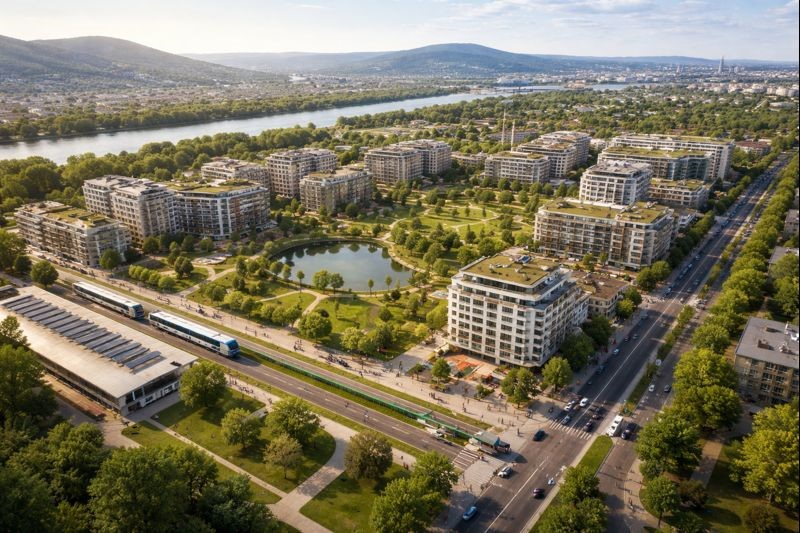
If you’re looking at long-term residential investment opportunities, the northern edge of Óbuda is suddenly hard to ignore. For years, this area felt like a missed opportunity, but that’s changing with Északi Városkapu. This long-planned redevelopment is now moving forward, turning a large, underused site into a new, fully planned neighbourhood. For investors, the appeal is straightforward: a location built around transport and liveability tends to support reliable tenants, steadier occupancy and rental income you can plan around.
The big picture
Északi Városkapu is finally moving forward, turning a large, underused site into a properly planned neighbourhood. For investors, that matters because well-designed areas tend to attract reliable tenants, steady demand and defensible rental yields, not just short bursts of interest.
The project covers around 35 hectares, which gives planners room to do things properly. Instead of squeezing housing into a tight footprint, the plan brings together homes, transport upgrades, green space and everyday services from the start. For rental investors, this kind of scale usually translates into broader tenant appeal, stronger long-term occupancy, and less reliance on short-term market swings.
Transport-driven demand is the key story
Rental demand follows transport, and Északi Városkapu puts connectivity front and centre. What’s planned includes:
- Widening Route 11, easing a long-standing congestion point
- A new HÉV stop, bringing fast rail access closer to future homes
- Improved bus connections
- Around 700 park-and-ride spaces, helping reduce pressure on residential streets
For investors, this matters because good transport expands the tenant pool. Properties near rail and major bus links typically see shorter vacancy periods and more consistent rental interest.
What kind of tenants does this attract?
Északi Városkapu is not positioned as a short-stay or tourist area, which is a positive for long-term investors. The neighbourhood design points toward young professionals commuting daily, couples and small families looking for modern, energy-efficient homes, and tenants planning to stay longer than one lease cycle. These groups value convenience, green space and predictable commutes, and they’re more likely to accept steady rent increases over time rather than constantly shopping around.
Rental yield expectations: realistic ranges
To put numbers into context, comparable residential areas with strong transport access typically deliver gross rental yields in the 4.5% to 6% range, depending on purchase price, unit size and finish. In improving or newly developed neighbourhoods, where rents rise as infrastructure comes online, yields closer to 5.5% to 6% gross are still achievable, especially in the early phases before prices fully adjust.
After running costs such as maintenance, vacancy and management, net yields commonly fall in the 3% to 4.5% range for well-managed long-term rentals. The key point is that Északi Városkapu’s appeal lies in steady, repeatable rental demand, not chasing unusually high yields that come with higher risk.
Pricing context and long-term outlook
Recent official figures for newly built homes in the capital have been around HUF 88–89 million on average, with square-metre prices above HUF 1.5 million. As transport links, parks and services are delivered, rental demand typically strengthens first, followed by gradual price adjustment.
For investors, this often means income stabilises before full capital growth is priced in. Early tenants can help cover holding costs, and long-term value is supported by infrastructure rather than marketing.
Timing and risk management
The project is currently in planning and permitting through 2025, with construction potentially starting in 2026. For investors, this creates a clear decision window. Entering early may delay rental income but improve yield on cost, while entering later can reduce construction risk but often compress yields.
Neither approach is right or wrong. It depends on your risk tolerance, time horizon and how you plan to manage vacancy during the ramp-up phase.
What investors should watch closely
Before committing capital, keep an eye on the final location of the new HÉV and bus stops, the delivery timing of green spaces and public amenities, how road upgrades affect access during construction, and the balance between rental-friendly unit sizes and overall density. These factors directly influence tenant demand, achievable rents and long-term resale appeal.
Quick Q&A for investors
1.Is Északi Városkapu suitable for long-term rentals?
Yes. Strong transport, green space and planned services support stable tenant demand.
2. What rental yields are realistic?
Comparable areas typically deliver 4.5% to 6% gross, with 3% to 4.5% net for well-managed properties.
3. What type of tenants is it likely to attract?
Commuters, professionals and small families seeking modern, well-connected homes.
4. When could rental income start?
Depending on your entry point, income may begin after initial construction phases post-2026.
5. Why is this project different?
It’s infrastructure-led rather than speculative, designed for durability and long-term occupancy.