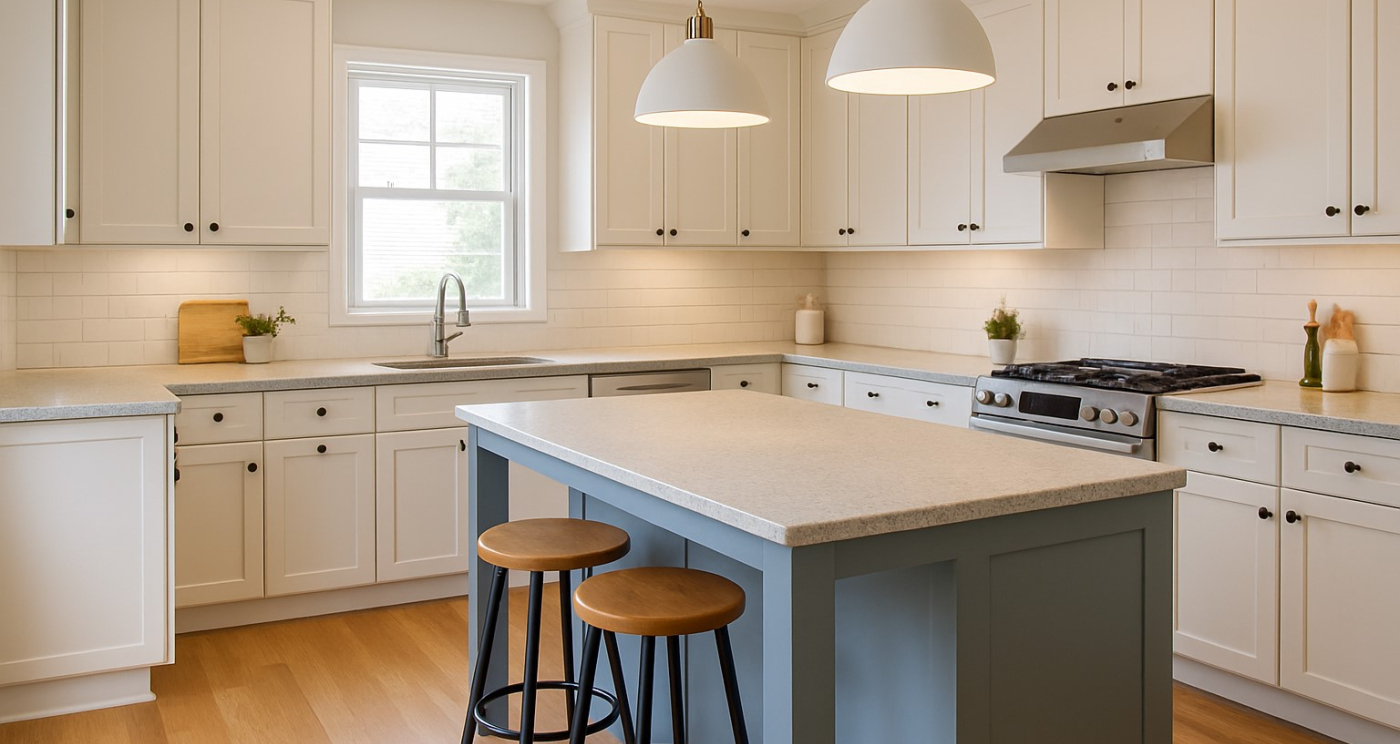
A new kitchen is one of the few renovations that can genuinely change how a home feels every single day. It’s where coffee happens, homework lands, and dinner parties start. It’s also one of the smartest places to invest: recent Cost vs Value reports show that a well-planned kitchen remodel can recoup roughly 70–90% of its cost at resale, while larger or more luxurious projects typically sit closer to 40–55%. The key is planning. A beautiful kitchen that doesn’t work will frustrate both you and future buyers. Here’s how to get the best result from your new kitchen renovation, with realistic budgets and a strong focus on everyday liveability.
1. Start With How You Actually Live
Before you fall in love with green shaker cabinets on Pinterest, zoom out and think about your real life:
- How many people cook at the same time?
- Do you cook fast weekday meals, slow Sunday lunches, or big family feasts?
- Do you need a breakfast bar for kids, or a quiet laptop corner?
- How much small equipment do you own air fryer, stand mixer, coffee machine, food processor?
International buyer surveys consistently show that practical layout, good storage and modern appliances are among the most important things people look for in a kitchen.
Make two lists:
- Must-haves: things that would be deal-breakers if they’re missing (dishwasher, full-height pantry, proper extractor, space for a large fridge).
- Nice-to-haves: things that would be lovely but you can live without (wine fridge, second oven, statement pendant lighting).
These lists become your filter for every design and budget choice.
2. Get the Layout and Zones Right First
A stunning kitchen with a bad layout is like a sports car with square wheels. It looks great, but you won’t enjoy using it.
Instead of thinking only in terms of the old “work triangle”, plan the kitchen as clear activity zones:
- Prep zone: chopping, mixing, unpacking groceries
- Cooking zone: hob, oven, pans, utensils
- Cleaning zone: sink, dishwasher, bins
- Storage zone: dry goods, equipment, tableware
- Social zone: bar seating or a spot where someone can sit without being in the cook’s way
Aim for:
- Uninterrupted workspace around the hob and next to the sink
- Enough distance so someone can walk behind the cook
- Dishwasher close to both sink and plate storage
- No doors that clash (fridge vs oven vs entrance)
In many city apartments, the kitchen is open to the living room, so good circulation is essential. Many recent renovations favour islands or peninsulas as the social heart of the room a place for breakfast, homework or a glass of wine while cooking – even if the space is not huge.
3. Maximise Storage and Worktops (Clutter Is the Real Enemy)
No matter how big the room is, if you don’t have enough storage and worktop space, the kitchen will feel messy and cramped.
Smart moves that buyers also love:
- Deep drawers instead of lower cupboards – easier access to pots, pans and dry goods.
- Pull-outs and inner drawers in tall units so nothing is lost at the back.
- A full-height pantry cabinet for food and small appliances.
- Built-in recycling and waste bins near the prep area.
- High wall cabinets or open shelving to use vertical space without feeling heavy (for example, lighter colours above, darker below).
Then pair that storage with generous worktops. If possible, create one long, clear run where you can comfortably prep a whole meal without balancing chopping boards on top of appliances.
Well-organised kitchens score highly in buyer preference studies and are often mentioned as a top reason for choosing one property over another.
4. Choose Appliances, Lighting and Energy-Smart Details
Across the EU, heating space and water together uses nearly 80% of household energy, and cooking accounts for around 6–7%. That means the kitchen has a real impact on comfort and running costs.
Appliances
Prioritise energy-efficient fridge, oven and dishwasher they run daily and have a big influence on bills. Consider an induction hob, which is fast, precise and generally more efficient than older electric plates.
Pick the right size: a huge fridge in a small apartment isn’t just visually heavy; it also costs more to run.
Lighting
Layered lighting makes the space feel both practical and cosy:
- Ceiling spots or track for overall brightness
- Under-cabinet LEDs for shadow-free prep
- Warm-toned pendants over an island or table for atmosphere
Finishes
Trends change, but simple, timeless finishes tend to perform best when you eventually sell:
Neutral cabinet colours with maybe one accent (an island or lower units)
Durable worktops (laminate in good quality, composite stone, or treated wood)
Easy-to-clean splashbacks (subway tiles, large format tiles, or compact slabs)
Industry surveys show that most renovated kitchens fall into “modern classic” or “transitional” styles rather than extreme minimalism or very ornate looks precisely because they age well.
5. Kitchen Renovation Cost in Budapest
Basic refresh
(painting, changing handles, replacing a few fronts, small fixes)
around 800.000–1.700.000 Ft
Mid-range renovation
(new cabinets, worktops, standard appliance set, some lighting and flooring)
around 1.900.000–3.800.000 Ft
High-end kitchen
(custom cabinetry, premium worktops, layout changes, high-spec appliances)
from roughly 4.600.000 Ft up to 7.700.000 Ft+, depending on size and specification
Experts also suggest a simple rule of thumb: spend about 5–15% of your property’s value on the kitchen and keep a 10–20% contingency for surprises such as old wiring, plumbing issues or extra plastering.
To stay in control:
- Get at least three detailed quotes with clear line items for demolition, electrics, plumbing, cabinets, worktops, flooring and painting.
- Decide your absolute ceiling number in HUF first, then design within it.
- Prioritise things that are hard or expensive to change later (layout, electrics, cabinets) ahead of things you can upgrade in a few years (decorative lighting, bar stools, fancy tapware).
Final Thoughts: Design for Real Life, Not Just Photos
A great kitchen renovation doesn’t need to be the most expensive one. The “wow” factor that impresses both you and future buyers usually comes from:
- A layout that feels natural and easy
- Plenty of storage and clear worktops
- Quiet, efficient appliances
- Warm, layered lighting
- Materials that still look good after years of use
Get those foundations right, and your new kitchen becomes more than a design project – it becomes a daily pleasure and a genuine asset when it’s time to put your home on the market.
Quick Q&A: 5 Essential Questions
1. Is a kitchen renovation really worth it for resale?
Yes. Cost vs Value data shows that smaller, well-planned kitchen updates often recoup around 70–90% of their cost, while bigger, more luxurious remodels still provide strong lifestyle value even if their percentage ROI is lower.
2. How much should I budget in HUF?
For an average apartment kitchen, many homeowners end up between 1.900.000 and 3.800.000 Ft, depending on size and finish, with at least 10–20% extra set aside for surprises.
3. What gives the best “bang for buck”?
Improved layout, quality cabinets and drawers, durable worktops and a good extractor fan usually do more for daily life and resale than ultra-luxury finishes.
4. How long does a kitchen renovation usually take?
From demolition to final silicone, a typical project runs 4–8 weeks, depending on complexity, material lead times and whether walls or services are being moved.
5. What’s the biggest mistake people make?
Starting with colours and handles instead of layout, storage and budget. Always plan how the kitchen should work first then choose how it should look.