Water isn’t just an environmental issue, it’s a line item on your monthly budget. In Hungary, tap water is generally safe and high quality, but that doesn’t mean it’s cheap once you add wastewater charges, fixed fees and building costs. Reusing water you have already paid for is one of the easiest ways to protect both your wallet and the planet.
Average daily water use typically sits around 100-110 litres per person, with higher-use households easily reaching 150-160 litres. This is close to the broader European trend, where consumption averages roughly 124 litres a day per person. At the same time, European targets are encouraging countries to reduce water use in the coming years due to rising drought risks and growing pressure on infrastructure. Every litre saved really does count.
When looking at your bill, it is helpful to understand how charges work. Besides paying for the actual water you use, households also face fixed fees. These are standard monthly charges you pay regardless of usage. Think of them like a gym membership: even if you barely go one month, the membership price stays the same because it covers things like maintenance, staffing and equipment. In the same way, water providers apply fixed fees to help maintain pipes, treatment systems and round-the-clock service. So even if you go on holiday and barely turn on a tap, the fixed fee remains because it covers the cost of keeping the system ready for you.
Depending on location, combined water and wastewater costs can vary widely. Some households pay around 80-300 HUF per cubic metre, while others, especially those with higher wastewater tariffs, may exceed 600 HUF per cubic metre once all components are included. That means any reduction in daily water use can translate directly into lower yearly bills.
Below are six practical, home-friendly ways to reuse water, perfect for apartments, panel flats or family houses with gardens.
1. Capture Shower Warm-Up Water
Most people let the shower run for 20-60 seconds before it heats up. Multiply that across a household, and you are pouring usable water straight down the drain.
Try this: keep a bucket under the stream while waiting for warm water. Use that clean, collected water for mopping, flushing the toilet by pouring it into the bowl, soaking laundry or outdoor cleaning.
How Much Does This Actually Save? A Simple Example
If a three-person household saves just 5 litres per person per day, for example by catching shower warm-up water, that adds up to 15 litres a day. That is 0.015 cubic metres of water, and over a full year, that becomes about 5.5 cubic metres saved.
-At a typical 220 HUF per cubic metre tariff, this is around 3 to 4 HUF a day and roughly 1,200 HUF a year.
-At a 300 HUF per cubic metre tariff, this is around 4 to 5 HUF a day and roughly 1,650 HUF a year.
-At a 400 HUF per cubic metre tariff, this is about 6 HUF a day and roughly 2,200 HUF a year.
This simple example shows how even tiny daily habits add up, and this is just one method. Combine several of the ideas in this guide and your savings grow significantly over time.
2. Give Cooking Water a Second Life
Pasta water, potato water or the water you use to rinse rice and vegetables can all be reused once cooled.
Great uses include watering plants if the water is unsalted, soaking dishes before washing, and wiping outdoor surfaces such as garden furniture or balconies. Just avoid using salted water for plants, and always let hot water cool fully before reusing it.
3. Reuse Laundry Water Safely
Laundry cycles produce a large volume of greywater. While this water can be useful, it must be handled safely.
Ask a qualified plumber whether your layout supports a simple greywater diversion for garden irrigation, outdoor taps or toilet flushing in a compliant system. Greywater is not safe to drink and must never be used for cooking or bathing.
If you are a property owner or landlord, eco-friendly plumbing solutions such as simple greywater systems can be a small but appealing upgrade for tenants who value lower utility bills and sustainable living.
4. Use Rainwater for Gardens and Balconies
Rainwater harvesting is one of the easiest water-saving habits you can adopt.
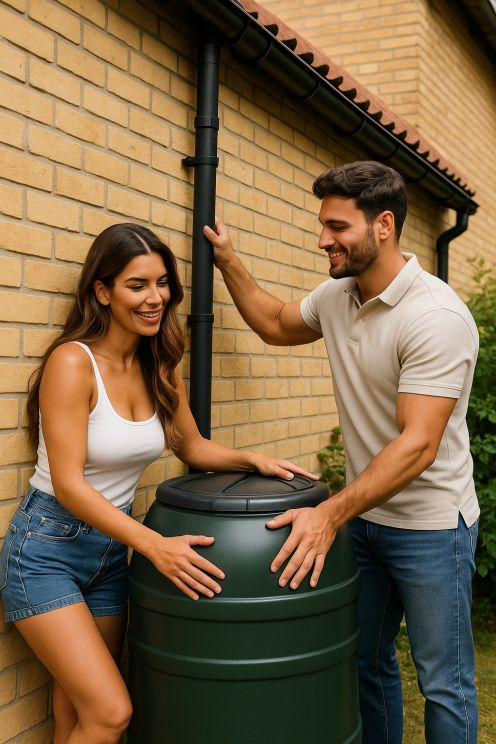
In houses, you can install a rain barrel on a roof downpipe, add a tap for easy access and use the collected water for gardens, lawns, vegetables and outdoor cleaning. Even a modest barrel that fills and empties repeatedly over the season can provide several cubic metres of free water.
In flats, you can collect runoff from balcony planters and reuse it for indoor or balcony plants. It is a small habit that reduces your dependence on treated tap water for non-drinking purposes.
5. Do Not Waste Condensate from Appliances
Air conditioners and dehumidifiers can generate litres of clean condensate daily, especially in warm or humid weather.
You can use this water for steam irons, cleaning glass and mirrors or wiping delicate surfaces. It behaves similarly to low-mineral or distilled water and can save you from buying separate distilled water for some appliances.
6. Build Everyday Micro-Habits
Small daily habits stack up to big annual savings when it comes to water.
Try using vegetable-rinsing water for plants, emptying half-full water glasses into a watering can, using leftover pet bowl water for cleaning or saving rinse water when washing fruit. These tiny habits help you reduce mains water use without needing any plumbing changes or expensive devices.
How Much Could You Save Overall?
A typical home uses around 100–110 cubic metres of water per year. At roughly 220 HUF per cubic metre for variable usage, not including fixed fees, that equals about 22,000–24,000 HUF annually.
If you reuse enough water to cut consumption by 20–25 percent, you could reduce variable costs by roughly 4,000–6,000 HUF per year, with even higher savings for large households or in areas with higher wastewater tariffs.
In Budapest, where consumption per person tends to be higher than the national average, responsible water use and reuse can have an even greater financial and environmental impact.
Quick Q and A: Water Reuse at Home – 5 Essentials
1. Is it worth saving small amounts of water? Yes. Even a few litres a day adds up to several cubic metres annually over the course of a year.
2. Can I drink or cook with greywater? No. Greywater must only be used for non-potable purposes such as irrigation or toilet flushing, in systems designed for that purpose.
3. Do I need permission for a greywater system? Simple rain barrels are usually fine, but plumbing changes in multi-unit buildings may require approval from the building manager or owners association.
4. Can renters reuse water too? Yes. Buckets in the shower, balcony plant watering and reusing condensate from appliances are all rental-friendly options that do not require permanent changes.
5. Do water-saving features increase property appeal? Yes. Buyers and tenants increasingly value homes with lower running costs and eco-friendly features, so visible water-saving measures can make a property more attractive.