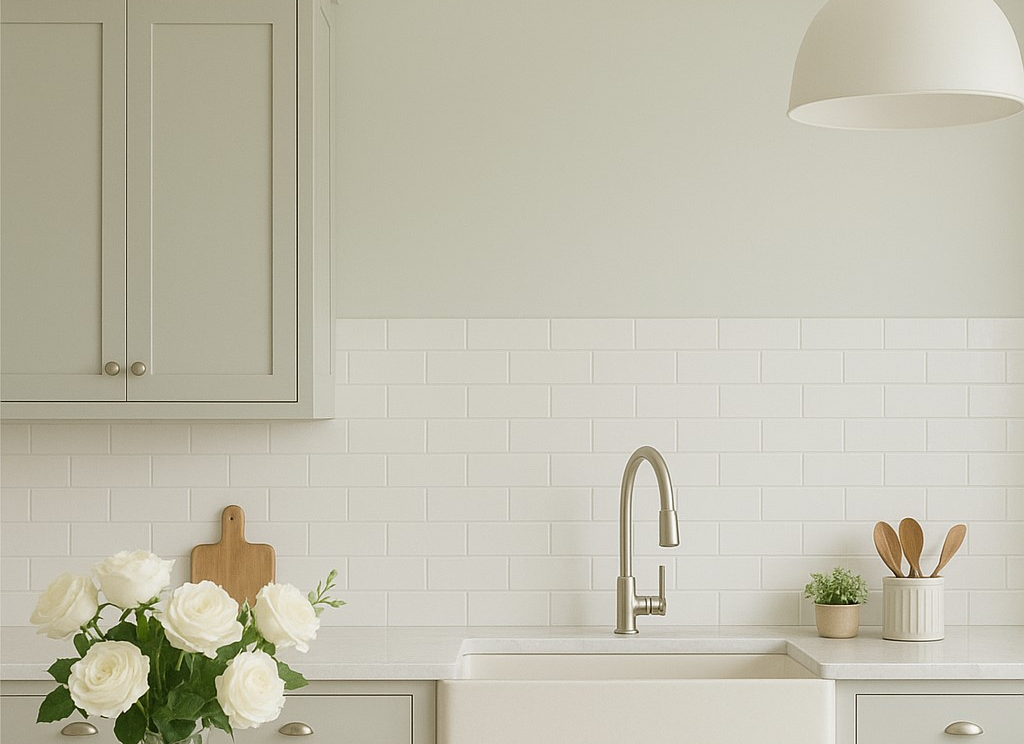
Your kitchen is where morning coffee happens, late-night pasta appears out of nowhere, and friends somehow always end up leaning on the counter. A full renovation can cost millions of forints – but the right wall colour can completely change the mood for a tiny fraction of that.
Here’s a practical, lifestyle-friendly guide to picking a kitchen paint colour (and finish) that still feels fresh years from now – tuned to local homes, budgets and climate.
1. Start with the kitchen you actually have
Before you fall in love with a colour on Pinterest, take a slow look around at what is not changing anytime soon:
Cabinets and worktops
Dark wood or anthracite fronts? Go lighter on the walls so the room does not feel heavy.
White or very pale cabinets? A soft greige or putty tone on the walls will keep things warm and avoid a clinic feel.
Flooring and backsplash
Patterned tiles, brick, or terrazzo already bring visual noise. Pair them with calmer, low-contrast wall colours so the whole room feels intentional, not chaotic.
Natural light and direction
Winters are long and grey, and a lot of city kitchens face inner courtyards or side streets. Cooler light (north- or east-facing rooms) makes colours look bluer, so you will want warmer whites and beiges there. South-facing kitchens can handle fresher greys and muted blues.
Size and layout
Many city apartments have kitchens in the 8–12 m² range, often open to the living space. Popular homes in major cities are frequently in the 40–60 m² bracket, so every square metre has to feel bright and functional.
Small, boxy kitchens work best with lighter walls and mid-sheen finishes that help bounce light. Open-plan spaces benefit from a wall colour that also works with your sofa, rug and TV wall, not just your cabinets.
2. Colours that really work in local homes
Trends come and go, but there are a few palettes that consistently look good in brick apartments, panel flats and new-builds alike.
Soft, warm neutrals (the safe, stylish choice)
Think warm white, cream, linen, oatmeal and pale greige.
Why they work:
· They reflect light in darker stairwell-facing kitchens.
· They flatter both modern gloss cabinets and classic wood fronts.
· They are ideal if you might sell in a few years, because buyers love bright, neutral kitchens, especially when property prices per square metre are already high.
Keywords to look for on cans include meleg fehér, törtfehér, bézs, greige and homok.
Earthy greens and muted blues
Soft sage, olive grey, dusty blue and blue-grey tones are gorgeous with oak or walnut worktops and shaker-style doors. They make a small kitchen feel calm rather than cold, especially if you choose slightly greyed-out tones instead of bright pastels.
Deep accent shades
Ink navy, charcoal, deep forest green and rich clay work well when used on a single feature wall, the breakfast bar back or half-height wall panelling. Keep the rest of the walls light so the room does not shrink visually.
3. Finish and durability: what actually survives real life
Colour is only half the story. The finish decides how your walls cope with spaghetti sauce and tiny fingerprints.
Which finish where?
Matte
Hides wall imperfections beautifully, but marks more easily and is harder to clean. Best for ceilings and low-splash areas away from the hob and sink.
Satin or eggshell
These have a very soft sheen that still feels modern. They are more resistant to cleaning than standard matte, yet do not show every roller mark like gloss. They are ideal for most kitchen walls and high-traffic areas.
Semi-gloss or gloss
These finishes are tough and very wipeable but highlight any uneven plaster. They are best for doors, trims, skirting and occasionally a bold feature wall.
How to know a paint is truly washable
In Europe, interior paints are often classified by EN 13300 wet abrasion classes from 1 to 5, where Class 1 is the most scrub-resistant and Class 5 the weakest. For kitchens, it is worth looking for Class 1 or 2 paints near the hob, sink and busy snack zones. This information is usually shown on the label as EN 13300 – 1. osztály or wet scrub resistance Class 1.
4. Healthier air: why VOC and low-odour paints matter
Cooking already adds steam and particles to the air, so it makes sense to avoid extra chemical smell from paint where you can.
VOCs, or volatile organic compounds, are solvents that evaporate from paint and can affect indoor air quality. In the EU, Directive 2004/42/EC sets limits on VOC content in decorative paints and varnishes to help reduce air pollution and protect health.
When comparing tins, look for low VOC or specific values such as VOC: max. 1 g/L, which is typical for premium washable ranges. Labels mentioning EU or MSZ-EN 13300 standards are also helpful. This is especially important in winter, when windows are closed for long periods and airing out after painting is more difficult.
5. What does kitchen paint actually cost in HUF?
Compared to new cabinets or stone worktops, paint is still one of the best value makeovers you can choose.
As a rough guide, a 10 litre bucket of quality interior white paint can cost around 8,690 HUF, with a listed coverage of roughly 80 square metres per coat, which is enough for many small kitchens with two coats on the walls. Premium, highly washable Class 1 paints with ceramic technology span a wider price range, with smaller cans starting from about 4,600 HUF upwards, but you usually need less than you think, especially in compact city kitchens.
In many flats, you can completely refresh your kitchen walls for well under 30,000–40,000 HUF in materials if you do the work yourself, making it one of the most cost-effective upgrades before renting out or selling.
6. How to test colours like a pro before you commit
Resist the urge to choose from a tiny fan-deck square. A simple testing routine will help you avoid expensive mistakes.
1. Shortlist three to five shades that work with your cabinets, worktop and floor.
2. Buy testers or small cans and paint them on A4 sheets of white paper or directly on the wall.
3. Place samples next to fixed elements, such as under the upper cabinets, beside tiles and near the window.
4. Check the colours in morning, afternoon and evening light, and with the lights on.
5. Live with them for two days and notice which one feels calm and right every time you walk in.
7. Simple recipes for popular kitchen types
Compact panel kitchen
Use warm white satin on the walls and a muted olive or sage on one short wall as an accent. Combine this with a light splashback and minimal upper cabinets to keep the room airy.
High-ceilinged city apartment
Choose a gentle greige for the walls and crisp white semi-gloss for trims and doors. For a boutique-hotel feel, consider a slightly darker tone on the doors.
Modern new-build
Soft putty or warm grey on the walls works beautifully with modern units. Add a deep navy or charcoal on the island back or bar counter, then finish with slim black handles and warm LED under-cabinet lighting.
8. If you are planning to sell or rent soon
Market data shows that housing transactions and prices have been rising again, and buyers focus heavily on kitchens when comparing listings. You do not need wild colours to impress.
· Keep walls in warm, light neutrals that photograph well.
· Choose durable, washable Class 1 or 2 paint so the kitchen still looks fresh after viewings and moves.
· Use bold colour only in easy-to-repaint spots, such as one wall or an island, so the next owner can tweak the style without major work.
A few days of do-it-yourself painting and a couple of buckets of good-quality paint can help your listing stand out against other properties with tired, yellowed walls, and you can achieve this without touching cabinets or tiles.
5-Point Q and A Summary
1. What is the best paint finish for most kitchen walls?
Satin or eggshell finishes are generally the best choice. They are more wipeable than standard matte, but still hide small imperfections better than gloss.
2. How do I make a small kitchen feel bigger?
Use warm whites or pale neutrals on most walls, keep upper cabinets light, and choose a mid-sheen paint that reflects light gently rather than a heavy, dark colour everywhere.
3. What should I look for on washable paints?
Check the label for EN 13300 Class 1 or 2 wet abrasion resistance, which tells you the paint can handle regular cleaning without quickly wearing through.
4. Why are low VOC paints worth the extra money?
EU rules already limit VOCs, but low VOC products keep indoor air fresher, reduce odour and are more comfortable to live with in colder months when you cannot air out the kitchen for long.
5. Is repainting really worth it before selling or renting?
Yes. Fresh, neutral, washable kitchen walls cost tens of thousands of forints rather than millions, but they can make your home look newer, cleaner and more move-in ready in photos and at viewings.