Asbestos has recently returned to the headlines in Hungary following contamination involving asbestos-containing crushed stone originating from Austria. The Hungarian government has established a HUF 3 billion Asbestos Removal Fund to help deal with the contamination. Municipalities can apply for support, and remediation of affected privately owned properties can also be included.
But asbestos can also be present in older buildings and building materials.
So what should you do if you suspect there is asbestos in your property?
Where Could Asbestos Be Found?
Asbestos was historically used in many different building products.
Possible locations include corrugated roofing and other asbestos-cement sheets, pipes, wall and ceiling boards, insulation and fireproofing materials. Some older floor tiles, flooring backing, textured coatings and other building products may also contain asbestos.
Garages, sheds and other outbuildings should not be overlooked, particularly where older roofing or sheeting has been used.
Can You Tell If Something Contains Asbestos?
It can be difficult to identify asbestos simply by looking at a material.
If you suspect something contains asbestos, don't break, cut or drill into it to investigate. Professional assessment and, where necessary, laboratory analysis of a sample can establish whether asbestos is present.
Does Asbestos Always Need to Be Removed?
Not necessarily.
Asbestos-containing material that is in good condition, sealed and left undisturbed may not need to be removed. A professional can determine whether it can remain safely in place or whether action is required.
What If You Are Renovating?
Renovation is often when previously undisturbed asbestos becomes an issue.
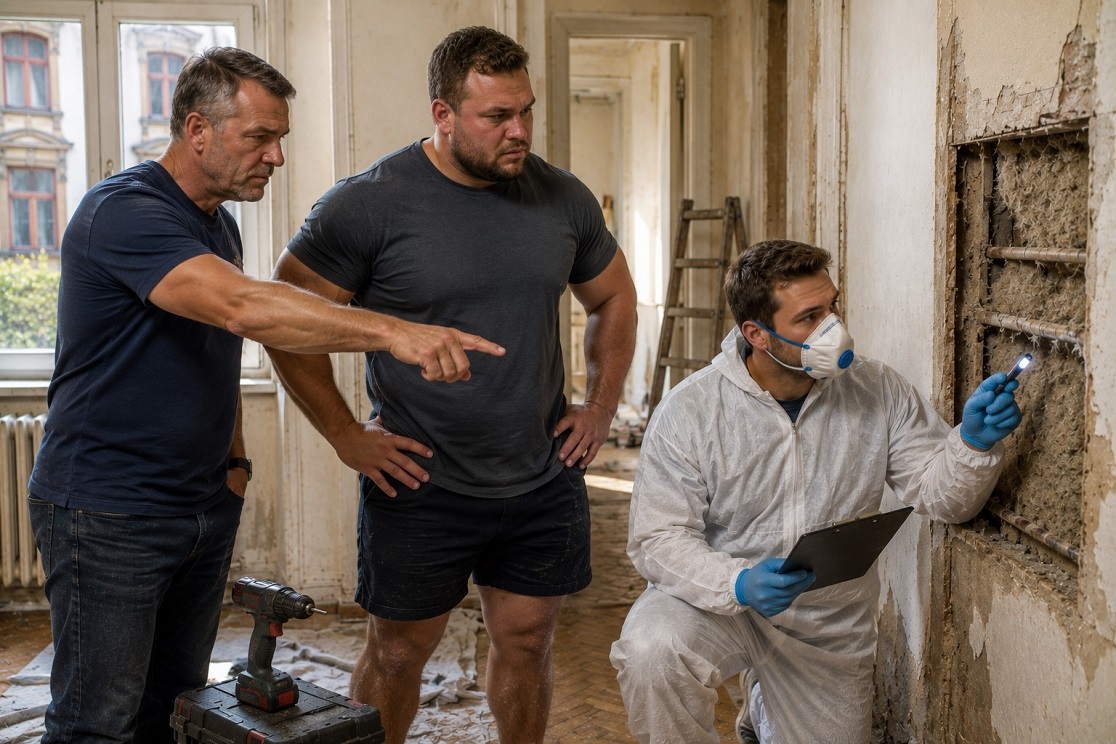
If asbestos is identified before work starts, any necessary removal can be planned before builders begin work in the affected area. An asbestos specialist can also advise whether occupants need to leave the property temporarily while removal takes place.
“Tell your builder about any known asbestos before they start work,” says Alex Markus, Chief Executive, City-Lets Ltd. “If something suspected of containing asbestos is discovered unexpectedly during the renovation, stop work in that area and get professional advice before continuing.”
What Happens to the Waste?
Asbestos-containing construction material is classified as hazardous waste in Hungary.
It should not be put into normal household rubbish or mixed with ordinary construction waste. If asbestos is professionally removed, make sure the waste is appropriately contained and taken to a facility authorised to accept asbestos-containing waste.
What If You Think You've Been Exposed?
If you believe you may have inhaled asbestos fibres, tell your doctor about the possible exposure, even if you do not currently feel unwell.
Asbestos exposure is associated with diseases including asbestosis, lung cancer and mesothelioma. These diseases can take many years to develop, with asbestos-related disease historically particularly associated with significant occupational exposure.
Can the New HUF 3 Billion Fund Help?
Individual property owners do not apply directly to the new fund.
Municipalities apply for support, and remediation of asbestos-contaminated privately owned properties can be included. An applicant municipality must have an asbestos map identifying affected areas.
If you own property in an affected area, check with the local municipality to establish whether your property is included in the mapped area and whether remediation of private properties forms part of its application.