Hungary's construction industry is experiencing one of its most difficult periods in years.
ÉVOSZ President László Koji says he cannot remember conditions being this severe for 10–15 years. Medium and large projects have been particularly badly affected as orders from the state, municipalities and major investors have fallen. State orders dropped from HUF 1,710 billion in the first half of last year to HUF 650 billion in the same period this year.
Koji says 2026 is now the industry's fourth difficult year, with activity around 7–8% below 2021 levels. In June, the volume of new construction contracts was 41.9% lower than a year earlier, including a 16.8% fall for buildings.
So what could help the industry build more efficiently?
Standardise More of What We Build
“One of the problems with construction is that we still approach too many homes as completely individual products,” says Alex Markus, Chief Executive, City-Lets Ltd.
“There is a strong case for greater standardisation. That doesn't mean rows of identical houses. Well-designed standard homes can still look good, while using proven designs can reduce complexity, create economies of scale and make construction more efficient.”
Move More Construction Off-Site
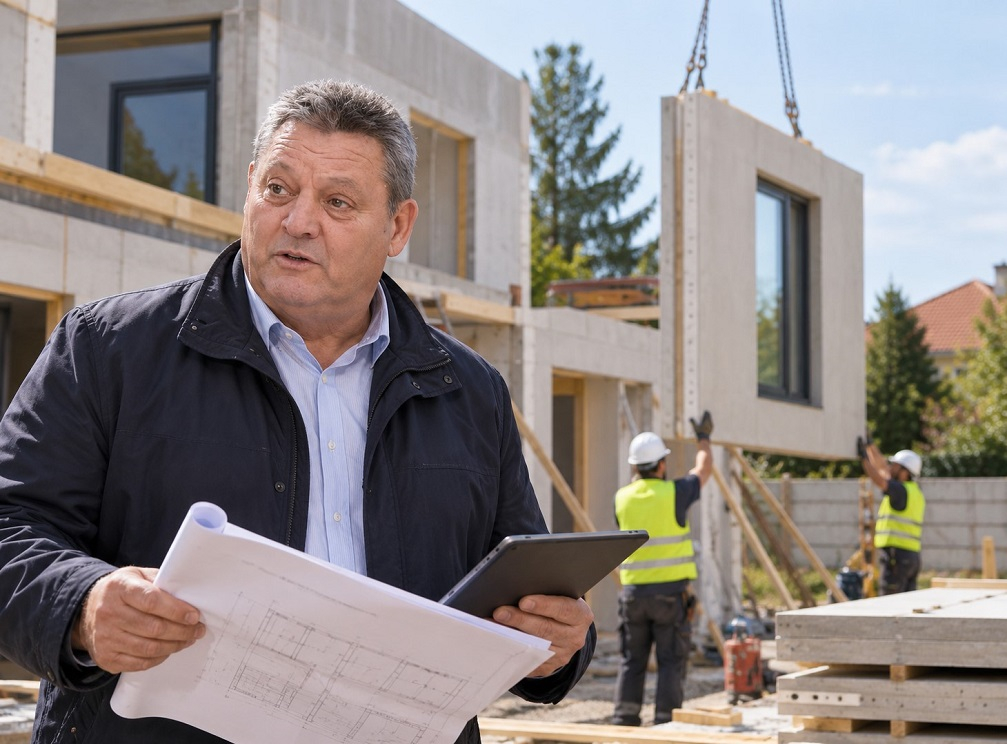
Prefabrication and modular construction offer another approach.
“We don't need to jump immediately from traditional construction to completely factory-built houses,” Markus said.
“Every part of the building process that can sensibly be moved off-site is worth examining. Knowing precisely what you are going to build, producing components repeatedly and reducing the amount of work required on-site is the direction we should be moving in.”
Make Building Faster and Easier
Another option is to reduce the time and complexity involved before construction begins.
That could include faster planning, environmental and utility approvals, together with investment in the infrastructure needed to make land ready for development.
“We should also be asking what new taxes, regulations or building requirements do to the cost of producing a home,” Markus said.
“Before introducing them, we should understand whether they will increase construction costs, push up the eventual price of a home or make some projects no longer worth building.”
Projects Still Have to Make Financial Sense
Koji says major investors are considering what conditions and incentives would make investing in Hungary worthwhile.
“That is fundamental,” Markus said. “Private capital will build when the numbers make sense.
“If projects are not financially viable, investors will put their money somewhere else.”
Connect Buyer Support to New Supply
Hungary has introduced substantial assistance to help people buy homes, but supporting buyers and creating additional housing are not the same thing.
“Helping somebody finance a home can improve their ability to buy, but it doesn't create another property,” Markus said.
“Where government is spending substantial amounts helping people buy, I would like to see more of that support connected to creating new housing. Otherwise we risk helping more buyers compete for the homes that already exist.
“The longer-term answer is to make it faster, easier and more economical to build. Standardise where it makes sense, manufacture more off-site and create conditions where investment in new housing is worthwhile.
“If we make building more efficient and viable, more homes can follow.”